
Shop
Showing 181–189 of 257 resultsSorted by latest
-

KA Wooden Pin
$12.00“KA” (Magkaisa/Unity) Baybayin also incorrectly known as Alibata is a pre-colonial Philippine writing system. The term baybayin means “to spell” in Tagalog. The script was used in the Archipelago along with other writing systems.
Bayani Art X Originatives
-

Blood & Gold Shield
Price range: $24.00 through $26.00Bagobo shield is a native shield of Mindanao that represents defense and the spears represents offense.
Art by Wylz Gutierrez

-

Revolt
Price range: $24.00 through $26.00Rajah Sulayman (1558-1575) Regarded as a brave and great ruler of Manila. He led a native revolt against the Spanish in 1574 when the new Governor-General did not honor the treaty with the prior Rajah. The defiance of Rajah Sulayman came to be known as the “Sulayman Revolt” also known as The “First Battle of Manila Bay”.

Learn more about Rajah Sulayman
Art by Marvin Monzon
-

Maypagasa (There is Hope)
Price range: $24.00 through $26.00Andres Bonifacio “Supremo” also known as “Maypagasa” (November 30, 1863 – May 10, 1897) a Filipino revolutionary leader, is known as the “Father of the revolution.” He was one of the founders and organizers of the Kataastaasan Kagalanggalang na Katipunan ng mga Anak ng Bayan or Katipunan (Sons of the people), whose aim was to achieve Philippine independence through revolution.

Learn more about Andres BonifacioBayani Art X Kristian Kabuay
Art by Tata Ponsi / Baybayin script by Kristian Kabuay -

Noble
Price range: $24.00 through $26.00Dr. José Rizal (June 19, 1861 – December 30, 1896) was a Filipino polymath, nationalist and the most prominent advocate for reforms in the Philippines during the Spanish colonial era. His novel Noli Me Tangere, published in 1887, played an important role in Philippine history. He is considered a national hero of the Philippines.
Art by Tata Ponsi
-
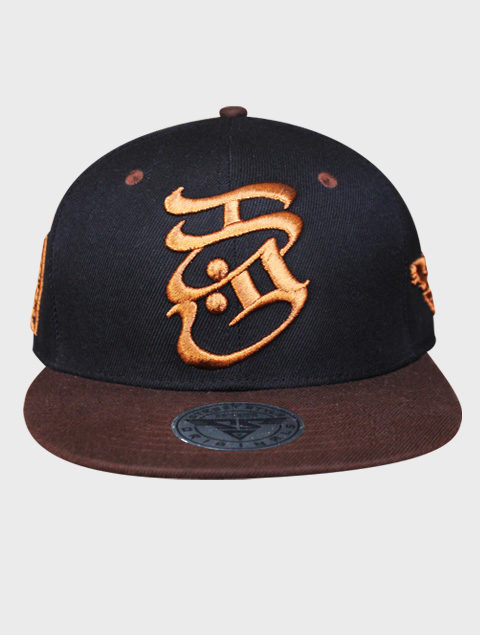
Kapwa (Snapback)
$29.00The KAPWA Kap. The word Kapwa written in Baybayin, the Philippine script. At its core the message is simple, as is the overall design. Kapwa is the embodiment of uniting self with others. This cap is a celebration of our fellow human beings. It celebrates YOU, the everyday person, everyday hero and the sharing of ones self and identity with others.
Bayani Art X Malaya Designs
-

Kapwa (Fitted)
$29.00The KAPWA Kap. The word Kapwa written in Baybayin, the Philippine script. At its core the message is simple, as is the overall design. Kapwa is the embodiment of uniting self with others. This cap is a celebration of our fellow human beings. It celebrates YOU, the everyday person, everyday hero and the sharing of ones self and identity with others.
Bayani Art X Malaya Designs
-

KA (Unity) / TaTao People Motif Pendant
$20.00KA-TaTao is an interpretation of this motif/pattern with the inclusion of the Baybayin character KA. Presented to you as an exclusive pendant piece. The KA character is iconic as it represents unity. The confluence of this pattern and the KA represent unity and the connection with others, community and the Anitos.
Bayani Art X Kapuwa
Designed by Pyrographer and Artisan, Ray Haguisan of Kapuwa
Laser Engraved by Calia Designs -

LapuLapu (Red Logo Snapback)
$29.00The design at the front of this cap is the name “Lapu Lapu” written in Baybayin, bordering the script are Bisayan tattoo designs called Patik. As with the tradition of the ancient and indigenous people throughout our islands, tattoos are only given to those who deserve the honor of wearing them. The mighty and brave warrior hero that is Lapu Lapu would’ve been adorned with these beautiful patterns.
Learn more about Lapu LapuBayani Art X Pamana Designs X SSO

-
 Lapu Lapu$24.00
 -
Product on sale
 Gabriela Silang Children's Bayani Book SeriesOriginal price was: $19.99.$15.99Current price is: $15.99.
 -
Product on sale
 Lapu Lapu Children's Bayani Book SeriesOriginal price was: $19.99.$15.99Current price is: $15.99.
 -
 Defend$24.00
 -
Product on sale
 Book Bundle - 3 Bayani Children's Book SeriesOriginal price was: $54.99.$44.99Current price is: $44.99.